Followers

Pages

Monday, November 15, 2010

Let go my Lego!

photo courtesy of Wikipedia

We all recognize these colorful little blocks. Although I don't remember playing with them when I was a child, my kids sure enjoyed them!

Legos were invented in Billund, Denmark thanks to a carpenter named Ole Kirk Christiansen, who made wooden toys in his workshop back in 1932. Two years later he named his company "Lego" from the Danish phrase leg godt, which means "play well." Loosely interpreted from Latin it also means "I put together" and "I assemble."

By 1940 Ole's company began making plastic toys, and in 1949 they started producing the interlocking blocks, calling them "automatic binding bricks."  Sales went poorly because plastic toys weren't regarded as highly as wooden ones, and many shipments were returned!

In 1954 Ole's son, Godtfred, took over as managing director and spoke with an overseas distributor about the building brick as part of a toy system.  And the rest, as they say, is history. The modern Lego brick was patented on January 28, 1958; bricks from that year are still compatible with current bricks.

Not only can you buy the Lego bricks, but you can also visit Legoland!

Godtfred Kirk Christiansen opened the first Legoland in Billund, Denmark in 1968 on 9 acres of land where all the buildings, landscapes and vehicles were built using standard LEGO bricks.

California's Legoland opened in 1999,  is a LOT bigger, situated on 128 acres and has an amusement park, restaurants, and shops, with Lego built animals and structures throughout the park.


photo courtesy of www.legoland.com


LEGOLAND Windsor outside of London opened in 1996, and LEGOLAND Deutschland in Germany opened the Spring of 2002. LEGOLAND Florida will open in the fall of 2011.


I wonder what old Ole would think of Nathan Sawaya.


Nathan was a lawyer but he loved making things with Legos. Then he won a contest with Legos and was offered a job to work for them at one of their new theme parks. Eventually he opened an art studio and now sells his commissioned art pieces made of Legos like the ones shown below.

Rebirth of New Orleans (66" x 42" x 64")


Piata 5 (no measurements found)


Swimmer (could not find measurements - just said "lifesize")


Circle Triangle Square (72" x 70" x 16")


This is the artist standing next to his creation of Stephen Colbert:


Big Bear (22 x 55 x 36)


Mt. Rushmore Replica (59" x 25" x 29")


Gray (45" x 45" x 15")


Grasp (30" x 67" x 30")

Yellow (35" x 13" x 38")


Reflection (28" x 48" x 20")


I think Ole Kirk Christiansen would be proud, don't you?

Sawaya’s art is currently touring North American museums in a show titled, The Art of the Brick. Visit his website to check where he is touring, to learn more about him, and to see more of his brilliant work.

(information for this post was gathered from Wikipedia, Legoland.com, and Nathan Sawaya's website.)

Sunday, November 14, 2010

Sunday Bridges - Red Covered Bridge


This beautiful red covered bridge was built in 1863 and was registered in the U.S. National Register of Historic Places on April 23, 1975. The bridge is 149 feet long and spans Big Bureau Creek just north of Princeton, Illinois. It is one of five remaining covered bridges in Illinois (another one is in Princeton, too!) and is still open to traffic.

I love the sign that hangs over the top of the bridge from days of yore.


For more Sunday bridges, join Louis La Vache here.


Wednesday, November 10, 2010

A movie called "Babies"

A fascinating documentary called,  "Babies", was released in April of this year. It simultaneously follows babies from  four different places in the world: Japan; United States; Mongolia, and Namibia (Africa).

There is barely any talking in the film; what talking IS in the film is inconsequential and in the language of each of the countries.

The most glaringly difference in how the four babies are raised is the one from Namibia. The baby and other small children just live off of the earth, play with rocks, and drink water from ponds.

The next different one was from Mongolia. The child seemed to be left alone a lot or with his older brother who seemed to be around 4 or 5. This child wandered around in the countryside, climbed up on a rusty bucket with nothing on from the waist down, all the while I was cringing, hoping he wouldn't cut himself.

The babies from the States and Tokyo were very similar and were raised how we are accustomed to seeing children raised.

In one scene from Namibia, the baby, who walks around naked, poops. The mother grabbed the baby, ran his buttocks down her shin to clean him off, then grabbed a corn cob and wiped off her leg. Done.

Now in our society, picture the same predicament. The mother would probably use a couple of "wipes" to clean off the baby's bottom, and then put on a disposable diaper. She'd have to get rid of the used diaper and wipes.

The Namibia mother walks around with just a covering over her bottom. Her breasts hang heavy with milk, which she lifts up and feeds one, sometimes two babies at the same time. Her breasts are nothing but feeding machines. Everything is pretty natural there.

What I found similar in all four scenarios was the love the mother had for her child. It didn't matter how much or how little the family had; the love between mother and child was strong.

Another similarity? No matter what the country, no matter what the language - siblings will fight. Two of the babies have siblings and it's interesting to watch their relationship develop.

And finally, no matter if the child grew up in a mud hut, a condo, out on an isolated farm, or a crowded city, they all developed about the same time; they all crawled, walked and talked within a few weeks of each other.

I would highly recommend this movie. It was so interesting to watch, just to see how people live on other ends of this earth.

Here is a short clip from the film.

Monday, November 8, 2010

Videos Worth Watching

It is hard to believe that YouTube was first introduced into society on Valentine's Day, 2005. Who HASN'T watched a video on YouTube? It has grown exponentially since that day.

Recently, YouTube, in connection with the Guggenheim Museum in New York City,


sent a call out to the world for artists to submit their videos. They were looking for creative videos, something that people haven't seen before.

Over 23,000 people responded.

From 90 countries.

A panel of jurors selected a "shortlist" of 200 videos. From THAT list, 25 videos were chosen to be the best. 

On October 21, 2010, the 25 winning videos were announced at a huge party at the Guggenheim Museum. The videos were also broadcast outside on the side of the building.


One of my favorites is called, "Birds on a Wire". A man was reading the newspaper and saw a photo of birds sitting on a wire. The birds reminded him of notes on a scale, so he cut the picture out and converted the "birds" to notes and made music. How creative is that?


Click here for the link to everything you'd need to know. It gives you the background about YouTube/Play, the shortlist, and the links to all the videos. And then, when you have time, just start clicking on some of them and enjoy. They are cool, and they are different.

Sunday, November 7, 2010

Sunday Bridges - Samson of the Cimarron


This is the Samson of the Cimarron, a 1,269 foot railroad bridge that spans the Cimarron River, located 13 miles north of Liberal, Kansas. It was built in 1939, replacing 3.5 miles of curves and areas of frequent flooding, by raising the tracks 113 feet above the riverbed. This bridge was considered an engineering marvel of its day.

For more Sunday bridges, visit Louis La Vache


Friday, November 5, 2010

Flashback Friday - Tucumcari, NM


Tucumcari is the largest city between Amarillo, TX and Albuquerque, NM. This little hole-in-the wall town was once a booming place when Route 66 was popular, since it runs right down the main street. Unfortunately now the town seemed pretty run down.

The town's slogan "TUCUMCARI TONITE!" is seen all over town and along I-40 for many miles to the east and west of the town inviting motorists to stay the night in one of Tucumcari's "1200" motel rooms.


At night the streets light up like the Vegas strip with cheap motels and gift shops.


This is a roadside sculpture to commemorate Route 66.


This is a souvenir shop. I didn't get a chance to browse in it, though, because it was closed when we were in town.


This restaurant is another throw-back from the old Route 66 -


There wasn't much to do in town. We found out that there were many murals throughout the town, so we grabbed the list with the map and went exploring. These are most of the murals.

The Legendary Road


Route 66


Welcome to Tucumcari


Where's my horse?


Horse - hee, hee


Even the local hair shop had a mural!


There are several stories how Tucumcari got it's name, but the most romantic one is as follows.

Apache Chief Wautonomah was dying and was troubled by who would succeed him as ruler of his tribe. He had two great braves, Tonopah and Tocom. They were not only rivals but both were vying for the hand of the Chief's daughter, Kari. Kari loved Tocom. Chief Wautonomah called the two braves to his death bed and said, "Soon I must die and one of you must succeed me as chief. Tonight you must take your long knives and meet in combat to settle the matter between you. He who survives shall be the Chief and have for his squaw, Kari, my daughter."

The braves fought while unbeknown to them, Kari hid nearby. When Tonopah killed Tocom, Kari rushed out and plunged her knife into Tonopah, then killed herself. When Chief Wautonomah saw this tragedy, he grabbed his daughter's knife and buried it deep within his heart, crying "Tocom-Kari", today a slight variation of the town's name - Tucumcari.

(Information from Wikipedia)

I bet this was a happening place back in the day, but now? Not so much.

Wednesday, November 3, 2010

Things in a Row - Part One

I got such a great response from my post entitled, "Things that are Round", that I thought I'd switch it up a bit with "Things in a Row". I hope you enjoy it!

You'd be surprised how many things are in a row....if you'd just look!

For instance, "Aprons",


and arrows,


balloons,


and bar stools.


Birds on a wire,

and bottles,


bottle caps


and cable spools.


Canadian geese,


and cans.


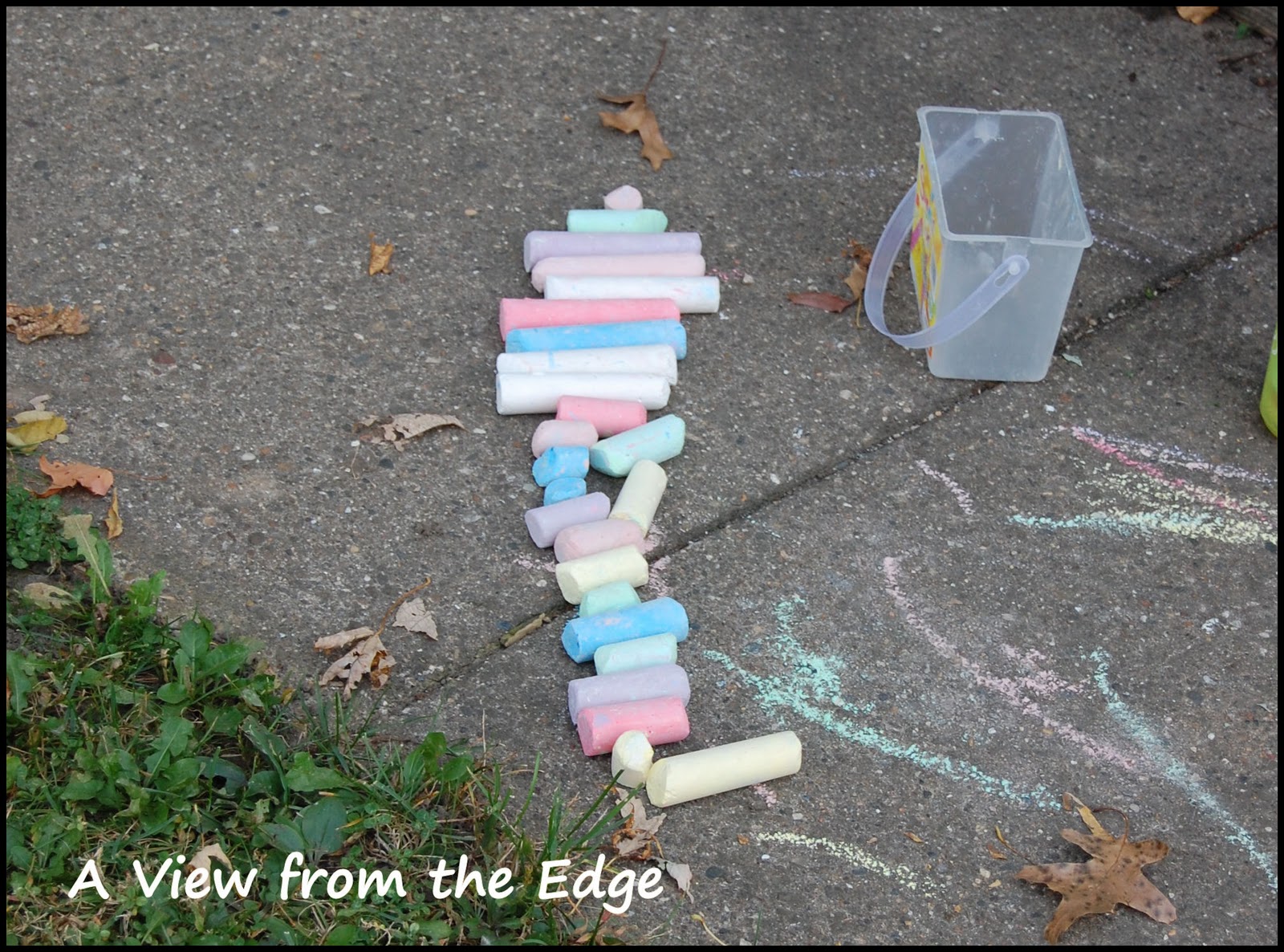
Chalk

and Clydesdale horses.


Fallen logs


and farm equipment.


Fir trees


and hops fields.


Horses


and irrigation systems.


Stay tuned for Part Two of Things in a Row in the weeks to come!